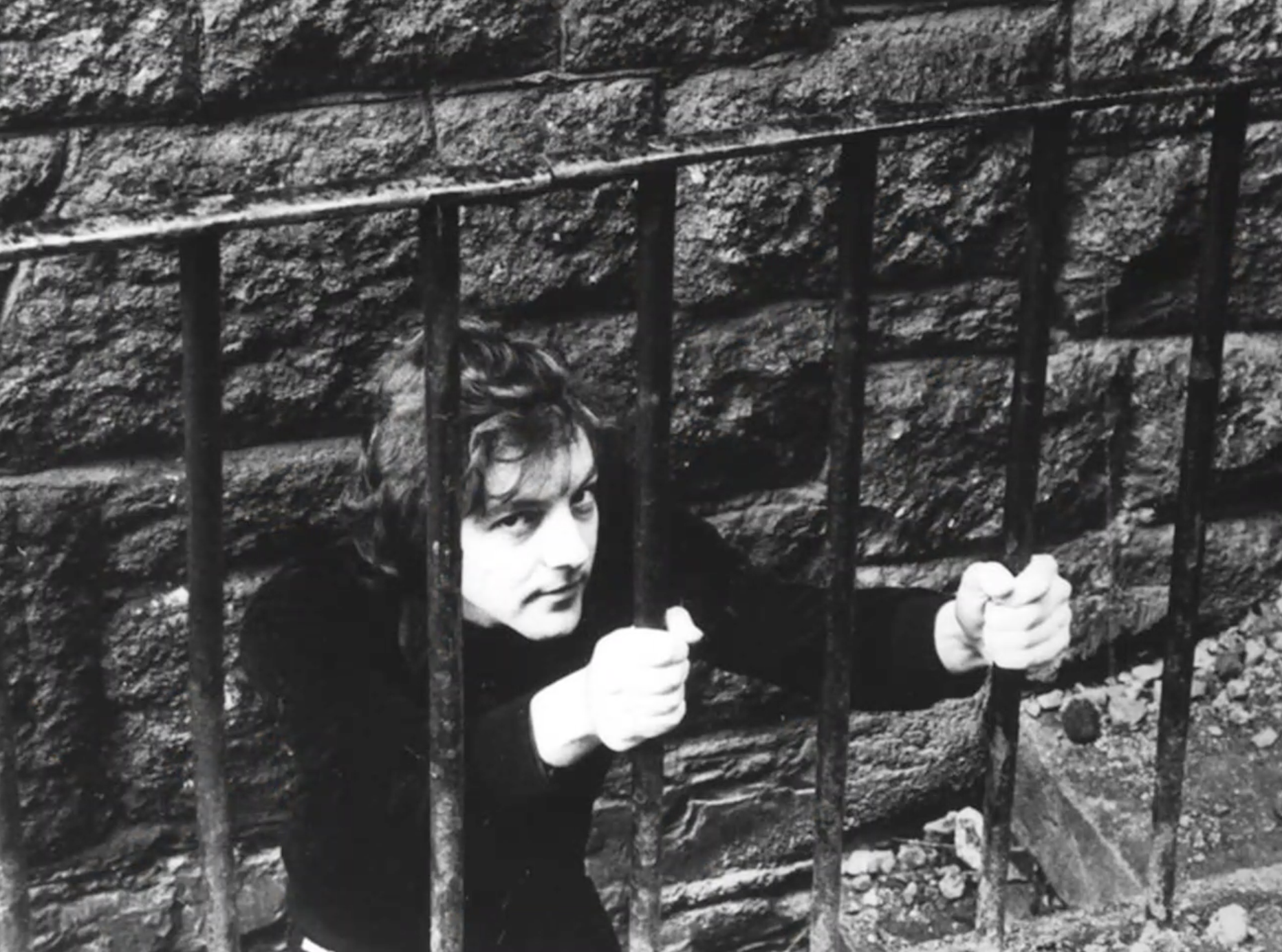

INTERVIEW: Paul Roland
Hey Readers of Rocky Road. Happy Friday! I’m sending you into the weekend with a pretty incredible interview from the one and only Paul Roland. Be sure to keep reading to find out about his beginnings in music, his gothic ballet and ghost experience with Marc Bolan!
What made you decide that music is the right path for you?
Paul: It wasn’t a conscious decision – it was simply an addiction to the ‘high’ that I felt when I wrote my first song at the age of 14. It was an itch that had to be scratched, a hunger that had to be fed. The fact that I only knew a few chords at the time and my guitar playing was rudimentary, to say the least, didn’t deter me at all. Fortunately, I was so mesmerised by the thrill of writing songs that I didn’t hear them as being simplistic or derivative. By the time I developed a critical ear, it was too late to go back to the crossroads and haggle with the Devil to tear up the contract!
What’s the inspiration behind your single ‘Mambo jo’?
Paul: For some reason which I can’t explain, Voodoo has always held a macabre fascination for me. And the fact that I had earlier written two songs on the subject (‘Jumbee’ on ‘A Cabinet of Curiosities’ and ‘Voodoo Doll’ on ‘Pavane’) didn’t dissuade me from writing a whole album on the same theme. ‘White Zombie’ grew out of a number of tribal ‘chants’ that I ‘channelled’ – as the psychics say – singing along to drum patterns like our ancestors would have done. A real shamanic experience. It was only after my Italian label insisted that I write a few songs to include between these chants that I sat down and wrote a handful of haunting songs among them ‘Mambo Jo’ which is the kind of voodoo bop I imagine Bolan would have written.
How did you first realise you had psychic abilities?
Paul: I had an out-of-body-experience when I was about six and found it an exhilarating and liberating experience. I was fully conscious of being out of my body and so I lost my fear of the paranormal and supernatural. Instead, I was impatient to learn what it signified and what else human beings were capable of when they raised their awareness beyond this physical world. But I knew there were a lot of charlatans and dubious characters out there and that it was a potentially dangerous thing to explore unless you could find the right guides and teachers, so I joined a healing group which I figured would only attract positive people. Once I had found a stable and safe environment with them I graduated to exploring serious mysticism with the Kabbalah and eventually wrote books on the subject, taught workshops and created my own Kabbalah Cards which are not simply Kabbalah-themed tarot cards but an original system of my own devising.

Tell us about your ghost experience with Marc Bolan?
Paul: The oddest thing that happened to me occurred when I was recording ‘Pavane’ in 2003, my first new album after a 7 year break from music. I was very unsure about recording again and in the middle of a session I ‘saw’ the ghost of Marc Bolan smiling at me! It may have been my imagination, or an actual apparition. It doesn’t really matter. The result was the same – I felt I had been given the approval and reassurance I needed. I haven’t seen a ghost despite all the books I’ve written on the subject, but many times I felt something or someone gently touching my cheek or patting my hair as I was working, as if to reassure me that I had the approval of ‘the other side’.
What is the story behind your Gothic ballet in Italy? How did this come about?
I was aware that there were other ‘Dracula’ ballets, but I knew I could create a very different story by focusing on Harker, who experiences the events in Transylvania in his fevered imagination. as a result of repressed guilt after he is seduced by a servant girl in the count’s castle. So instead of yet another gothic melodrama with which we are all overly familiar, we have a psychological drama which I hint will provide the material for Stoker’s novel.
I took a week to write the script last summer, dividing the narration between Dr Seward, Mina and Harker. By doubling some of the parts I kept the number of dancers to an absolute minimum and made it more likely that it would be staged. Composing and recording the entire ballet myself meant that there would be no need for a full score or real musicians and as many small ballet productions now use a pre-recorded track, it increased the chances even further of finding willing dancers, a choreographer and a venue to stage it in.
But I could never have imagined that I would be so fortunate as to find choreographer Paola Pedrazzini who also played the part of Mina and two male dancers Leo Moreno (who comes from a Hip-Hop background!) and Francesco Beltrani (who described himself as an ‘acrobatic’ dancer). Paola created the entire choreography from my brief notes and suggestions which Leo and Francesco added to as they rehearsed.
The venue was a small, converted chapel which still had frescoes and its original religious fixtures which looked down on the stage framed with black drapes and containing the minimal props (a desk, a mattress and boxes representing the coffins filled with the Count’s native soil). It gave the dancers ample space to express themselves in a blend of classical ballet, contemporary dance and mime. This was something entirely new for me. Performing songs before a live audience is a happy, pleasant and often exhilarating experience, but this was a very different event. The whole story had only existed in my mind until this moment and now here it was acted out in front of my eyes by professional highly talented dancers who brought the whole piece to life. The music, which was so familiar to me and which I was extremely happy with, now sounded to me as if it was being performed by an invisible orchestra and the Italian narrators added a suitably chilling element leaving my own ‘polite’ English version pale by comparison.
Tell us about your experience with Dr John?
Paul: I would be breaking the oath of silence I had made to him if I did so. Let’s just say that if you listen very carefully to the ‘White Zombie’ album and Baron Samedi is on your side, you might hear the spirits whispering. And you don’t even have to play it backwards!
